Governance Before ProfiT: The first of a new AEA Consulting series for Il Giornale dell’Arte.
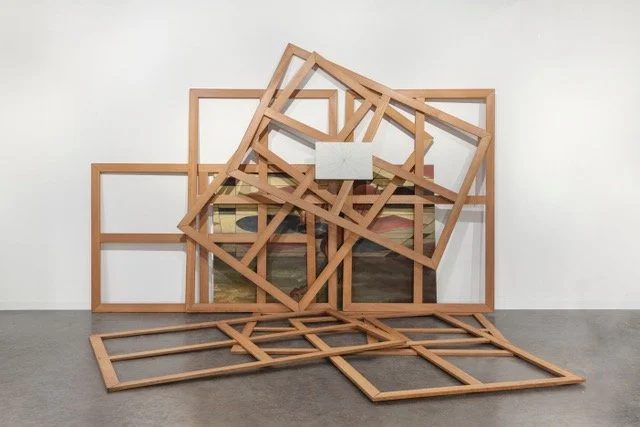
Giulio Paolini, «Mnemosine (Les Charmes de la Vie/8)», 1981-90 © Giulio Paolini. Foto Sebastiano Pellion di Persano. Courtesy di Fondazione Giulio e Anna Paolini, Torino
This month brings the first article in a new column that AEA Consulting has been invited to write for Il Giornale dell’Arte, a series conceived as a window on the Italian cultural institutional context and on the quiet questions of governance that shape the life of its cultural institutions.
The piece begins from a conviction I have carried across my work on both sides of the Atlantic: that, in Italy above all, the resilience of a museum rests first on its institutional architecture, on the way it is governed, and only afterward on the commercial and fundraising tactics built upon that foundation. Governance does not produce success on its own; more quietly, and more durably, it creates the conditions in which success becomes possible, and in which a vision can outlast the people who first imagined it.
We look through three institutions that could hardly be more different from one another: the Museo Egizio in Turin, Palazzo Strozzi in Florence, and Triennale Milano. We offer them not as exhaustive case studies, but as three vantage points, each opening onto a different facet of the same Italian question.
The claim is deliberately counterintuitive. For years, museums have been urged to become more entrepreneurial, to diversify their income, to think like businesses. We argue that this reverses the sequence: the diversification of revenue is not the starting point but the destination, and it is reached only when an institution’s governance, the rules, practices and responsibilities that determine how it is led and how it answers for its choices, has first made ambitious, long-horizon decisions possible. Governance does not guarantee success; it is what allows success, once achieved, to become durable and governable.
The three institutions could hardly be more different, and that is precisely the point. The Museo Egizio in Turin, a public-private participatory foundation with five equal founders, generates roughly 95% of its own revenue and has just seen its agreement with the State extended to 2064, a planning horizon almost unimaginable elsewhere. Palazzo Strozzi in Florence, a private foundation with no permanent collection, has turned that apparent constraint into freedom, building its program around temporary exhibitions and a Committee of Partners drawn from the economic life of its region. Triennale Milano, a private foundation under public control, holds together exhibitions, design, performing arts and research on a single platform, sustained by a mix of public funding and long-term private partnership. Three architectures, three routes to the same resilience, and no single model that could simply be transferred from one to the next
I am grateful to Evelina Christillin, President, and Christian Greco, Director, of the Museo Egizio in Turin; to Arturo Galansino, Director General, and Riccardo Lami, Program and Development Coordinator, of Palazzo Strozzi in Florence; and to Carla Morogallo, Director General, and Stefano Boeri, outgoing President, of Triennale Milano, for the generosity and candor of our conversations. My thanks, too, to my colleagues Adrian Ellis, founder of AEA Consulting, and Maria-Edmée di Sambuy, consultant, with whom this series is taking shape.
Read the full article in Italian here: https://www.ilgiornaledellarte.com/Articolo/Una-serie-di-AEA-Consulting-Governance-prima-del-profitto-tre-musei-ne-sono-la-prova