Beyond the Founder: The second of the AEA Consulting series for Il GIORNALE DELL’ARTE
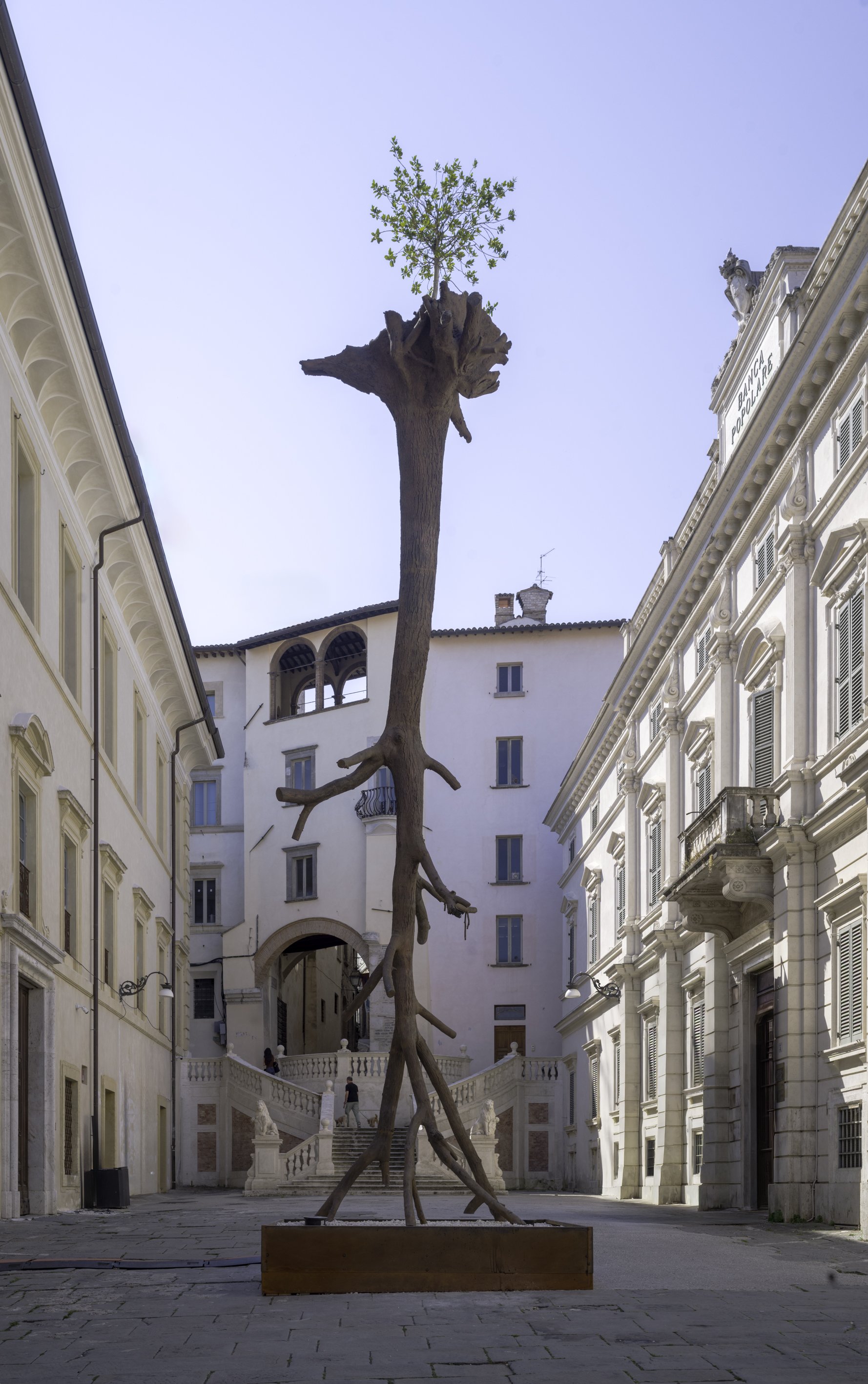
Giuseppe Penone, «Le foglie delle radici», 2011, Spoleto. © Archivio Penone.
The second piece in the AEA Consulting column for Il Giornale dell'Arte is on Italy's private initiatives: the shift from founder-led to mission-led, and what must be built while the founder is still there to build it.
Italy's private initiatives in contemporary art are young, and mainly concentrated in the north. They follow the map of industry and fashion, and Italy's private initiatives in contemporary art are young and mainly concentrated in the north. They follow the map of industry, fashion, and finance more than that of heritage, and almost all of them were built by a single generation. That generation is now, altogether, arriving at the same threshold. Where public funding retreats, these initiatives keep part of the country's cultural offer open, and their fragility is no longer a private matter. That generation is now, altogether, arriving at the same threshold. Where public funding retreats, these initiatives are keeping a part of the country's cultural offer open, and their fragility is no longer a private matter.
I take the question through three institutions and the people leading them: Sarah Cosulich, Director of the Pinacoteca Giovanni e Marella Agnelli in Turin; Paolo Gori, son of founder Giuliano Gori, at the Fattoria di Celle near Pistoia; and Laura Mattioli, founder of the Center for Italian Modern Art in New York.
At the Pinacoteca Agnelli, a presidency that guards the mission and a professional directorship together carry an ambitious program, with visitors more than tripling in recent years. At the Fattoria di Celle, created by Giuliano Gori, the next two generations are working on the same passage, sustained by family cohesion and the steady work of building the structures that will carry the collection forward: an archive, university partnerships, residencies. And at the Center for Italian Modern Art, its founder made the considered choice to bring the programming to a close. A founder, as Laura Mattioli put it to me, can give an imprint, but larger institutions are needed to carry a project forward.
The critical passage is from a founder-led institution to a mission-led one. In Italy, where public and private cultural logics have long followed different paths, this is more than a governance issue. It is the moment when a founder's mission becomes a text that others can interpret, and a structure that can carry it.
What a founder owes the institution they built is a decision, taken in good time and with the resources to sustain it: to carry it forward, to transfer it, or to close it. Closing is not the failure. The absence of a decision is.
The true measure of a private initiative, more than scale or prestige, is whether it can become someone else's, even when it is no longer the founder's.
I am grateful to each of them for their candor and generosity, and to Silvia Stabile of Studio Morri Rossetti e Franzosi for the legal perspective she brought to the piece.
Read the full article in Italian here: https://www.ilgiornaledellarte.com/Articolo/In-Italia-il-museo-privato-e-diventato-un-motore-della-cultura-contemporanea