Density and Community: What Tribeca and the Lower East Side Tell Us About New York’s Gallery Map
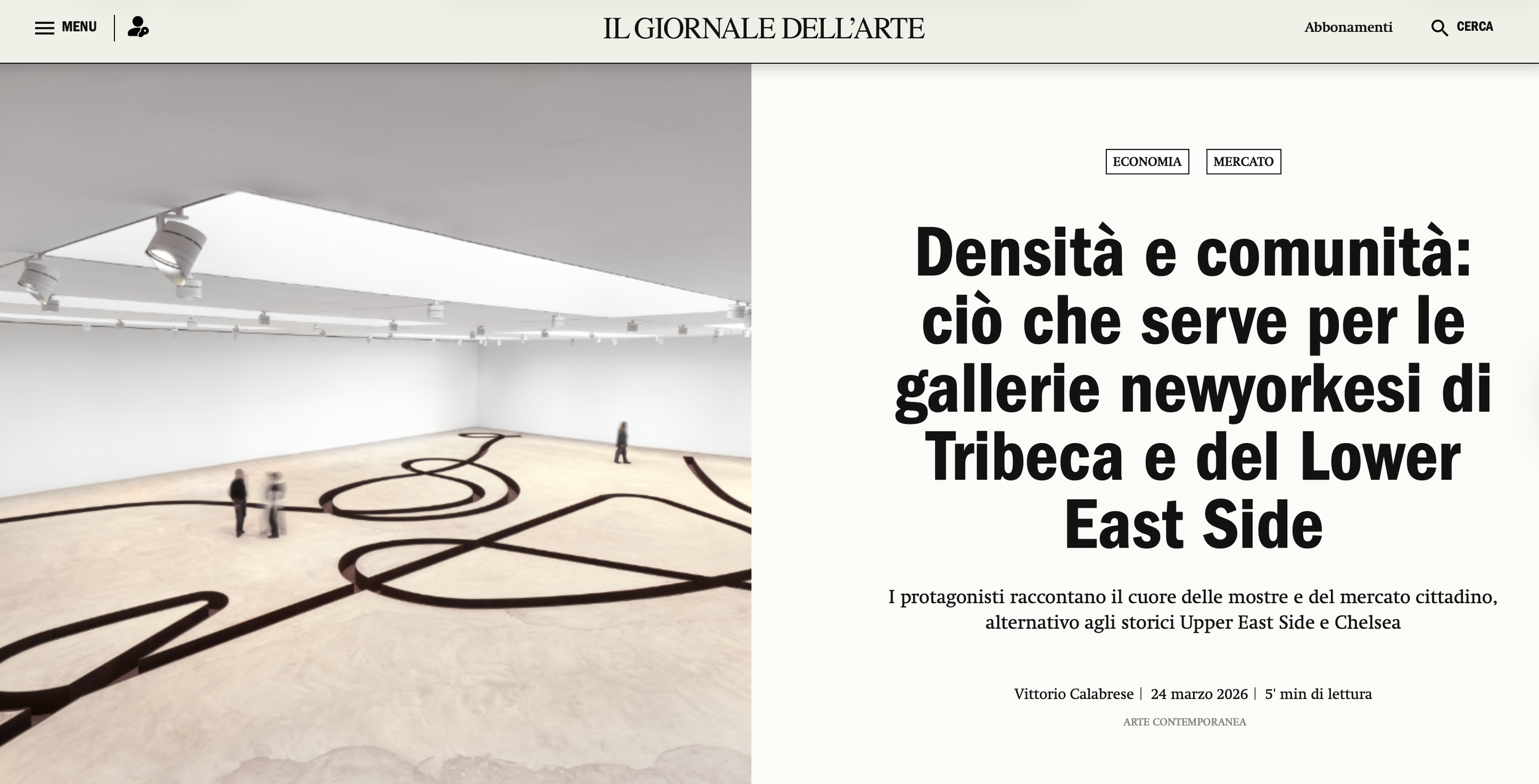
In spring 2026, Il Giornale dell’Arte asked me to report on a shift unfolding downtown: the rise of Tribeca and the Lower East Side as new centers of gravity for New York’s gallery scene, alternatives to the historic axes of the Upper East Side and Chelsea. I spent time downtown listening to the dealers, advisors, and directors building these districts, and what I came away with was less a map of addresses than a reading of culture as civic infrastructure.
Two ideas surfaced in every conversation. The first is density. The second is community. Neither works without the other.
I gathered six voices: gallerist Stefania Bortolami of Bortolami Gallery, the partners of Marian Goodman Gallery, gallerist James Cohan, advisor Paola Saracino Fendi of Schwartzman & Associates, Ylinka Barotto of Perrotin New York, and Talal Abillama of Gratin Gallery. Each read the same map from a different angle.
In Tribeca, density came first. Bortolami, among the first to invest in the area, was direct: to become “a place you go to see art,” you need “a density of similar galleries.” But density alone is not enough. The second ingredient is a culture of collaboration, built on collegiality and reciprocal introductions, which is what turns an address into a real community. It is a powerful model, and a fragile one: if costs and availability shift, so does the ecosystem. The arrival of Marian Goodman Gallery confirmed it, and James Cohan reframed geography as a programmatic choice rather than a search for visibility, because, as he put it, a space has to be attractive first of all to the artists. From the market side, Paola Saracino Fendi noted that collectors today look for quality over quantity, which puts the gallery visit back at the center.
A neighborhood becomes a place to see art only when there is a density of galleries, and that density only holds when dealers choose community over competition.
If Tribeca speaks of density and destination, the Lower East Side foregrounds a heterogeneous public and programming in constant dialogue with the neighborhood. Ylinka Barotto described Perrotin as a “malleable” space, but located its real fulcrum in community, “both global and local.” Known around the world, Perrotin remains, for many in the neighborhood, “the gallery next door.” From where the friction between cost and access is sharpest, Talal Abillama of Gratin Gallery described a quieter energy that demands more work to build an audience, and a model built on collaboration between galleries and an “artist first” discipline.
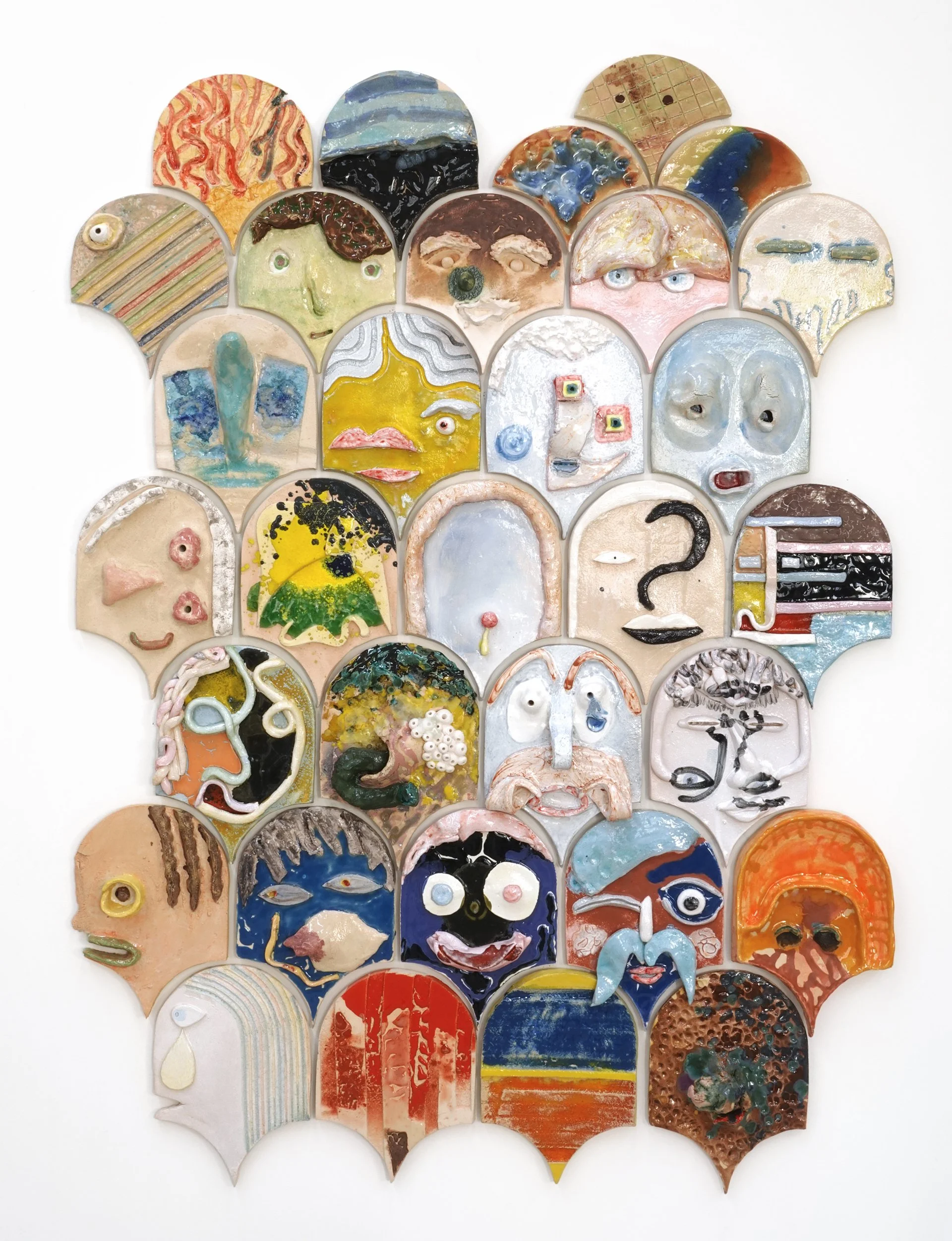
Gelitin, «All for All», 2025. Courtesy of the artists and Perrotin Gallery.
Read this way, the downtown map is an ecosystem built on density, programming, and the balance between real estate and cultural life. This is the kind of question that runs through my consulting practice with museums, foundations, and private collectors: how a place reads its own civic infrastructure, and how density and community, not marketing, are what finally make culture durable.
Read the full article in Italian on Il Giornale dell’Arte (ilgiornaledellarte.com)