Light, Time, and Design: Fifty Years of Eco-Drive at the Guggenheim MUSEUM
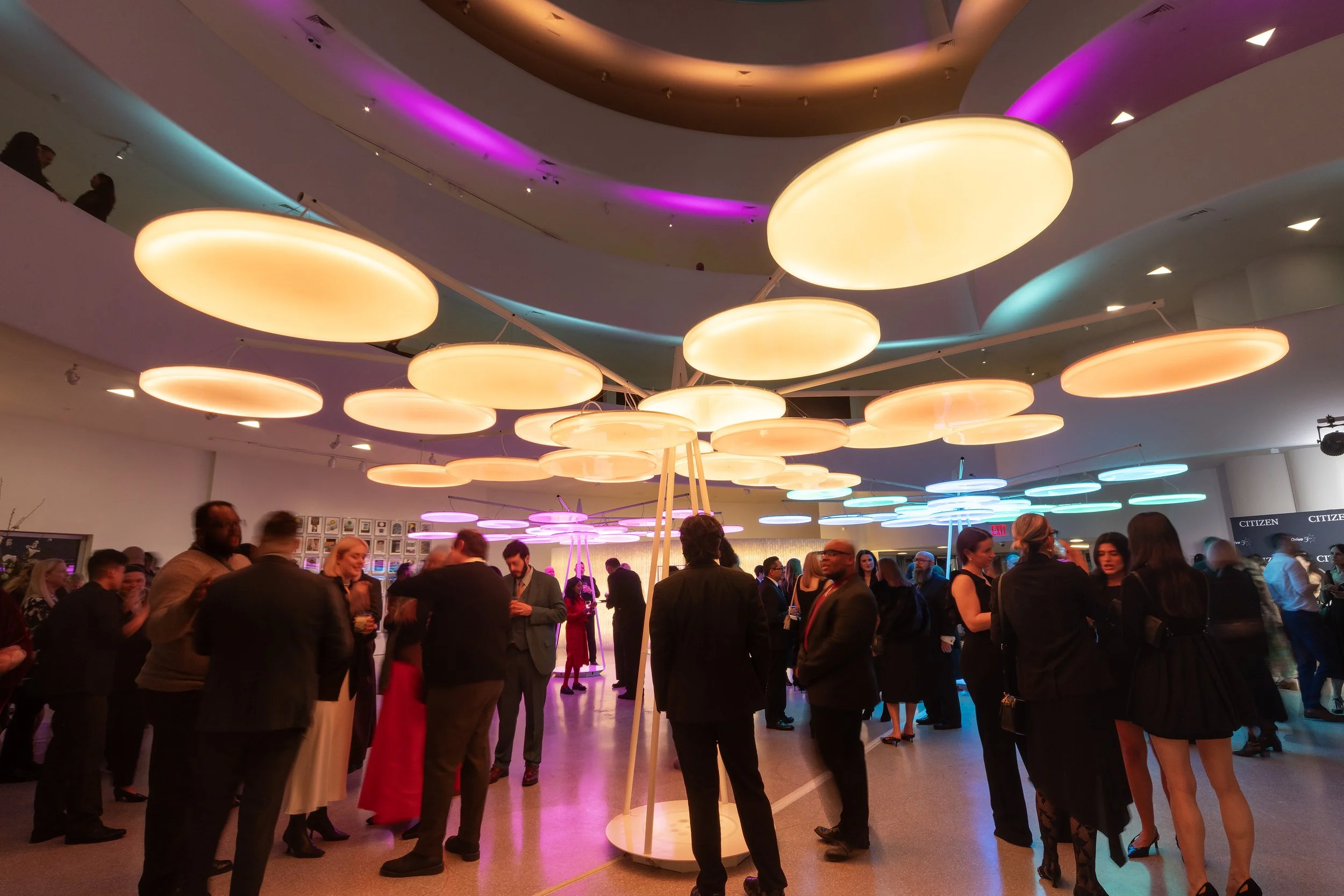
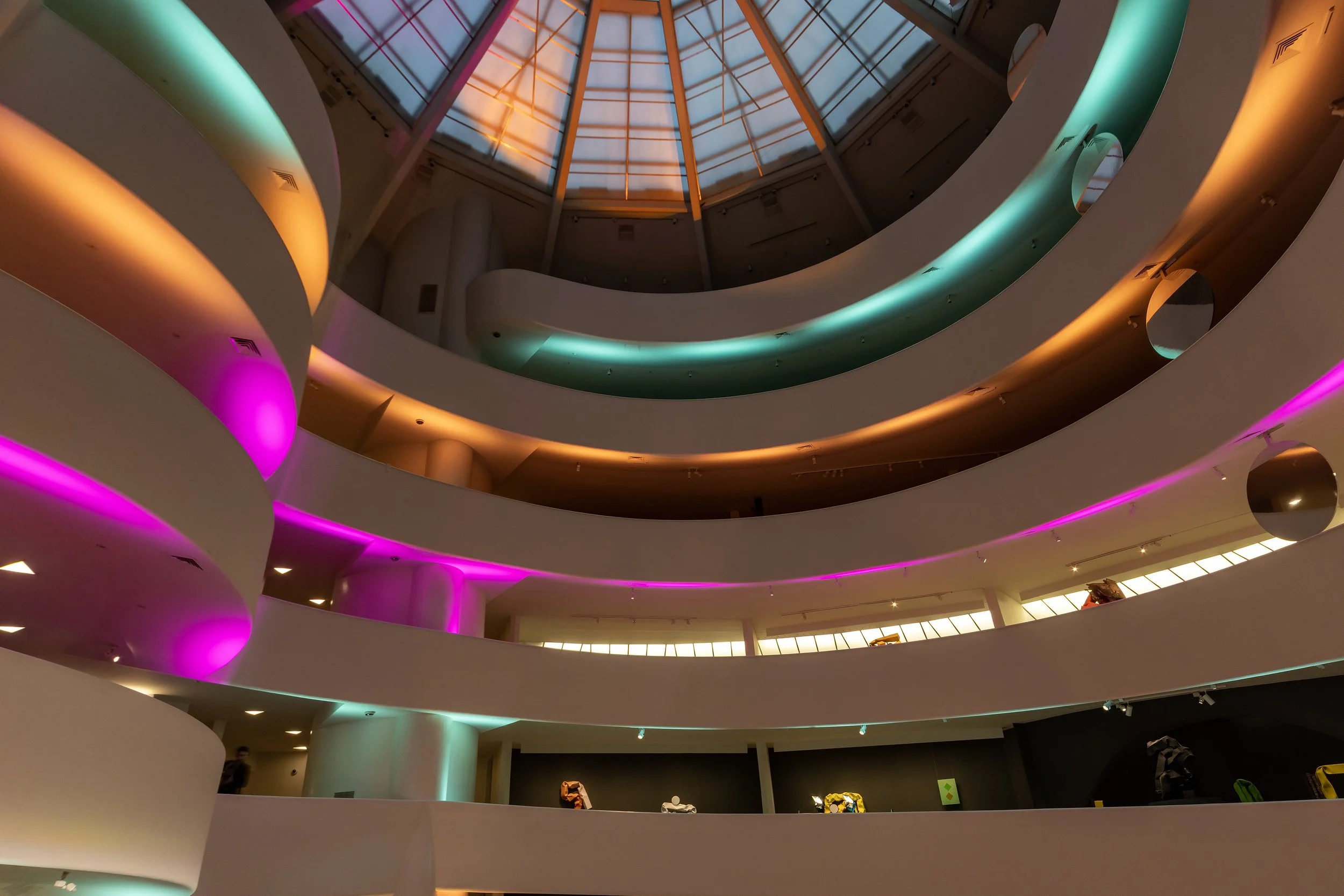
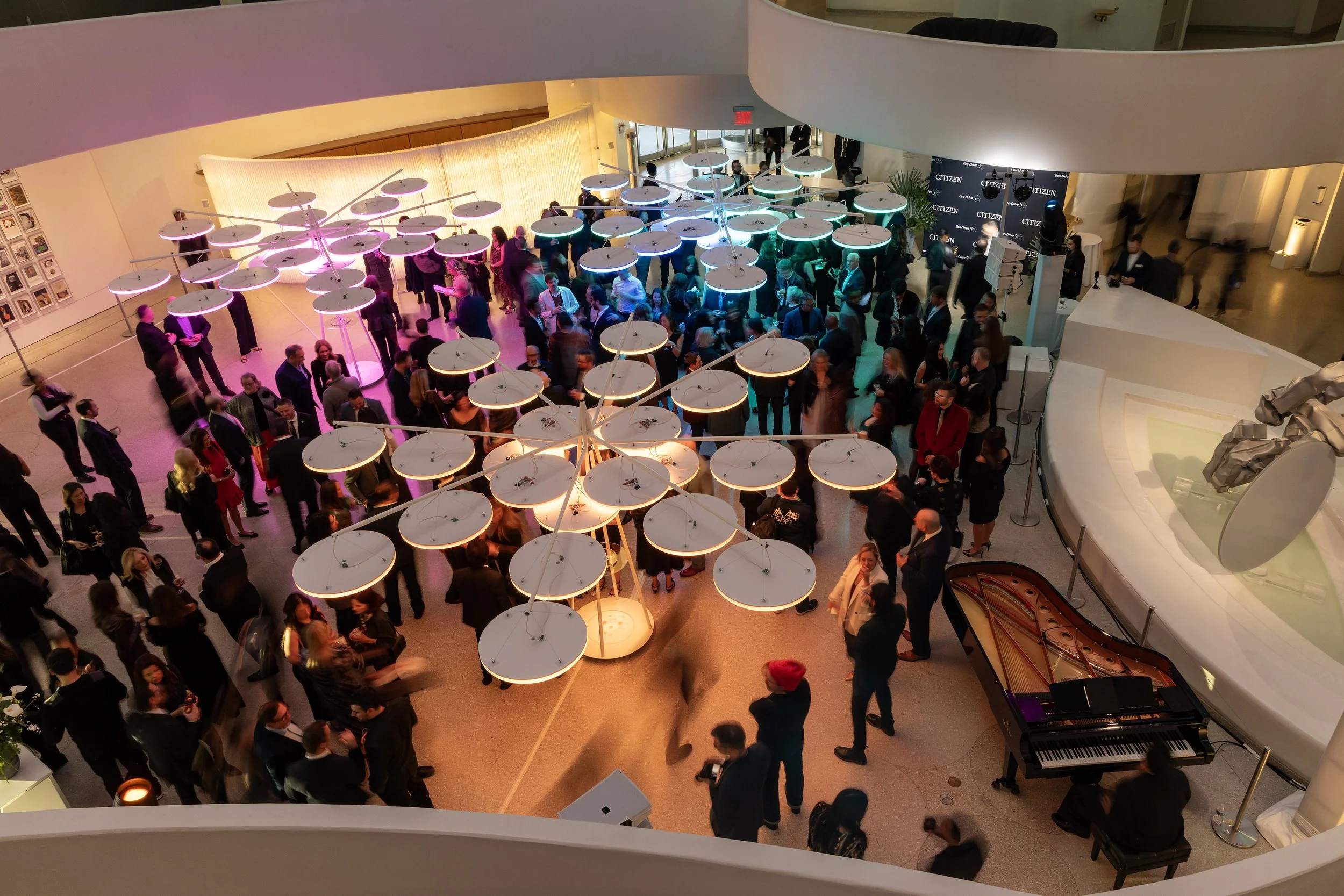
On the evening of 19 March 2026, the rotunda of the Guggenheim Museum became the setting for a celebration of fifty years of Eco-Drive, Citizen Watch's technology that converts any light into energy, allowing a watch to run indefinitely without a battery. Half a century of one of the most quietly radical ideas in the history of industrial design.
The evening also marked the culmination of more than two years in which I conceived and led a cultural and institutional strategy for Citizen Watch America. A long arc of milestones, activations, public moments, and storytelling that culminated in the opening of the brand's corporate museum in New York and in this Guggenheim evening, together forming a single evolving narrative about the brand's heritage, its innovation, and its place in the wider conversation about sustainable design.
The scope of the strategy I designed was to build an entire cultural and institutional communication architecture from scratch. Interpretation, accessibility, storytelling, exhibition design, public programs, and the institutional positioning that lets each of these elements speak to wider cultural audiences and to a wider conversation about industrial design and sustainability. The aim throughout was to translate the brand's heritage and technology into cultural form that could stand inside institutions like the Guggenheim with full credibility.
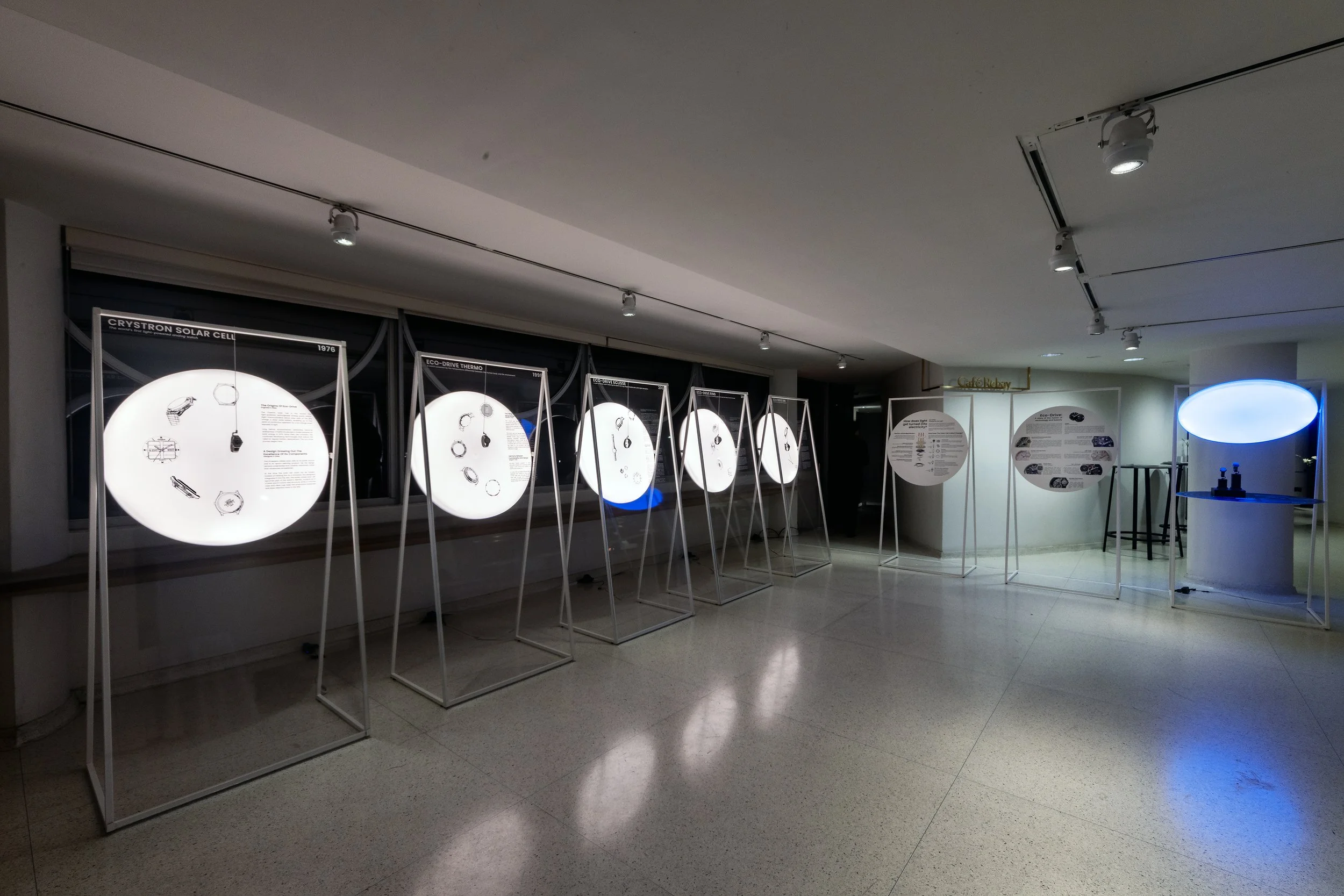
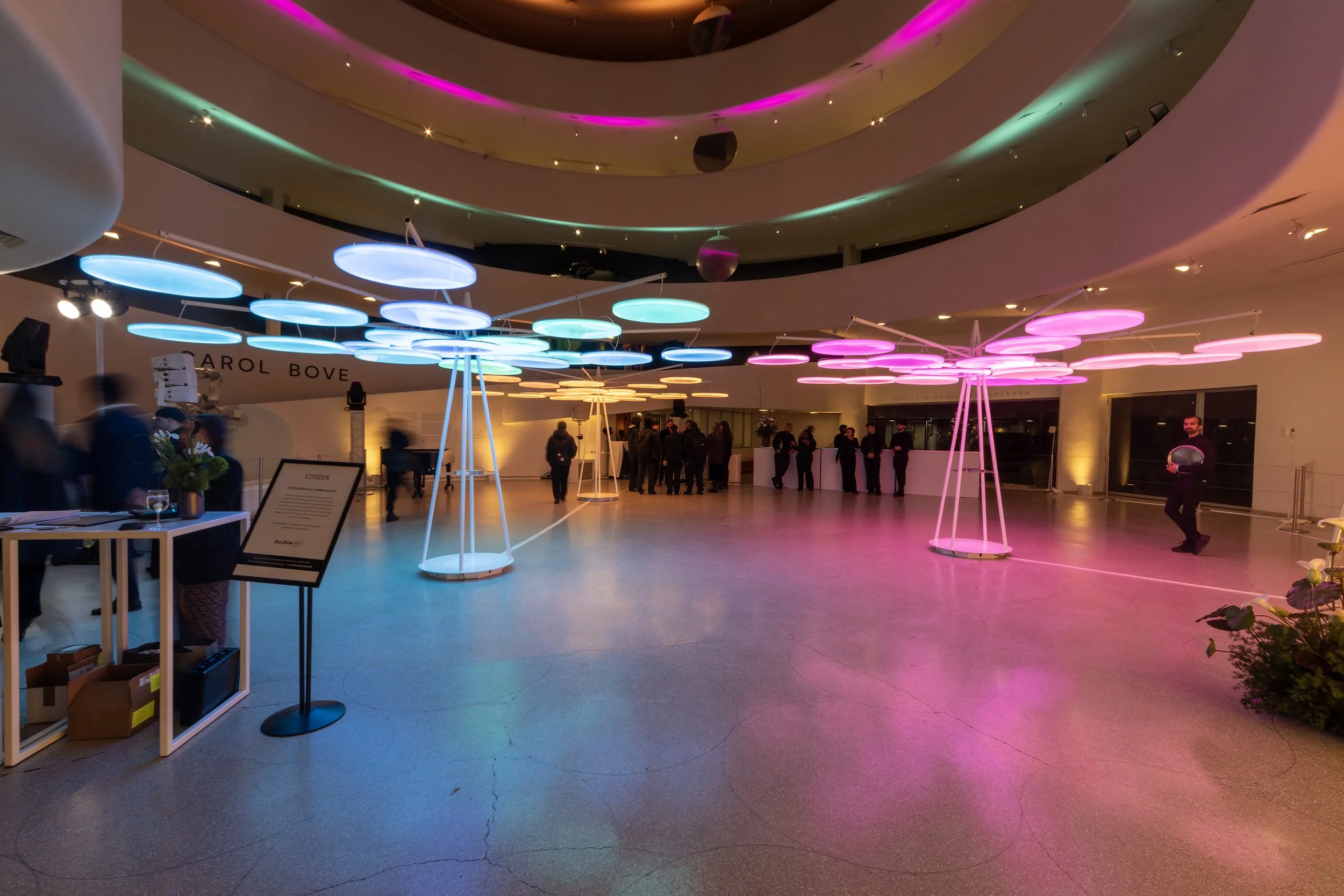
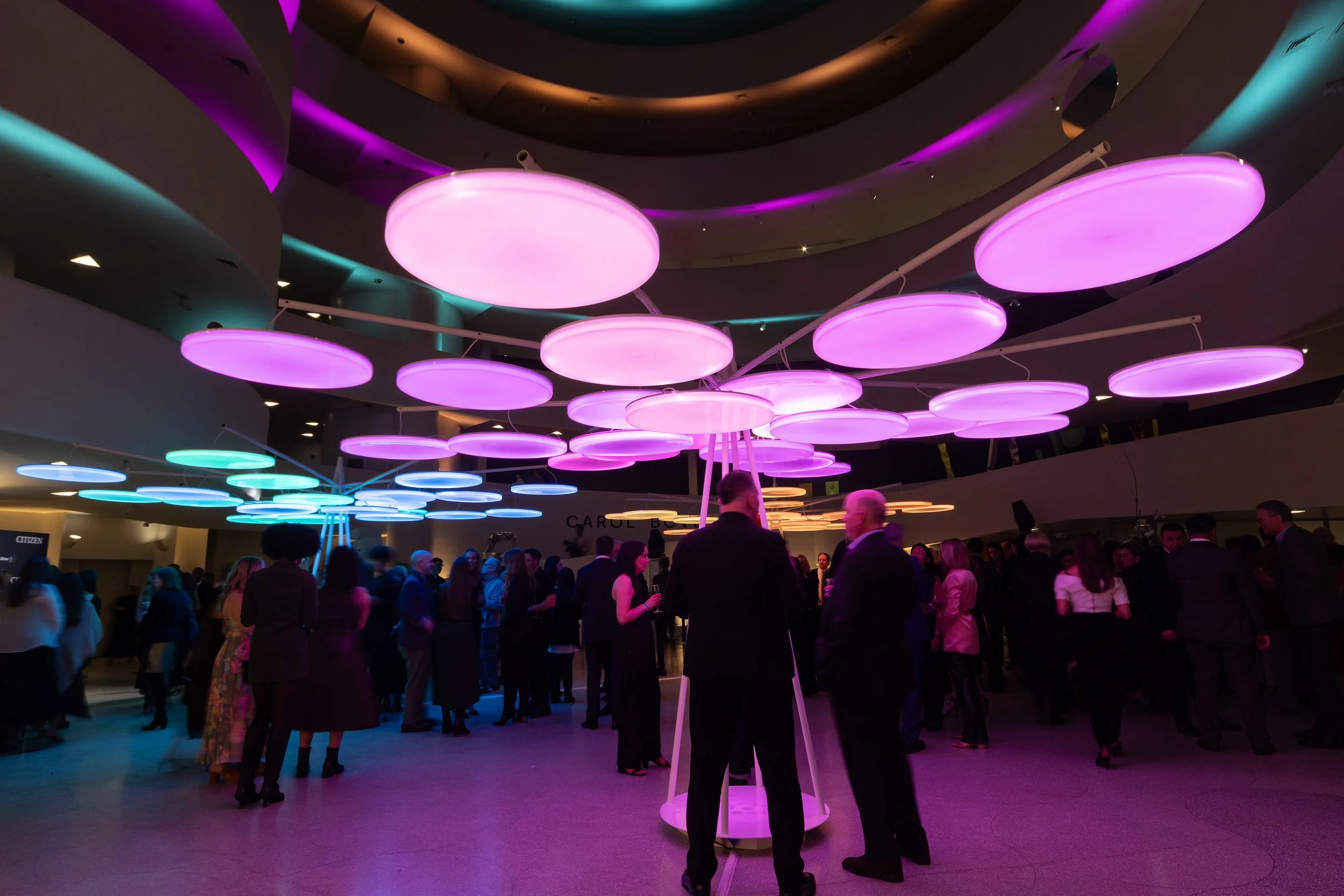
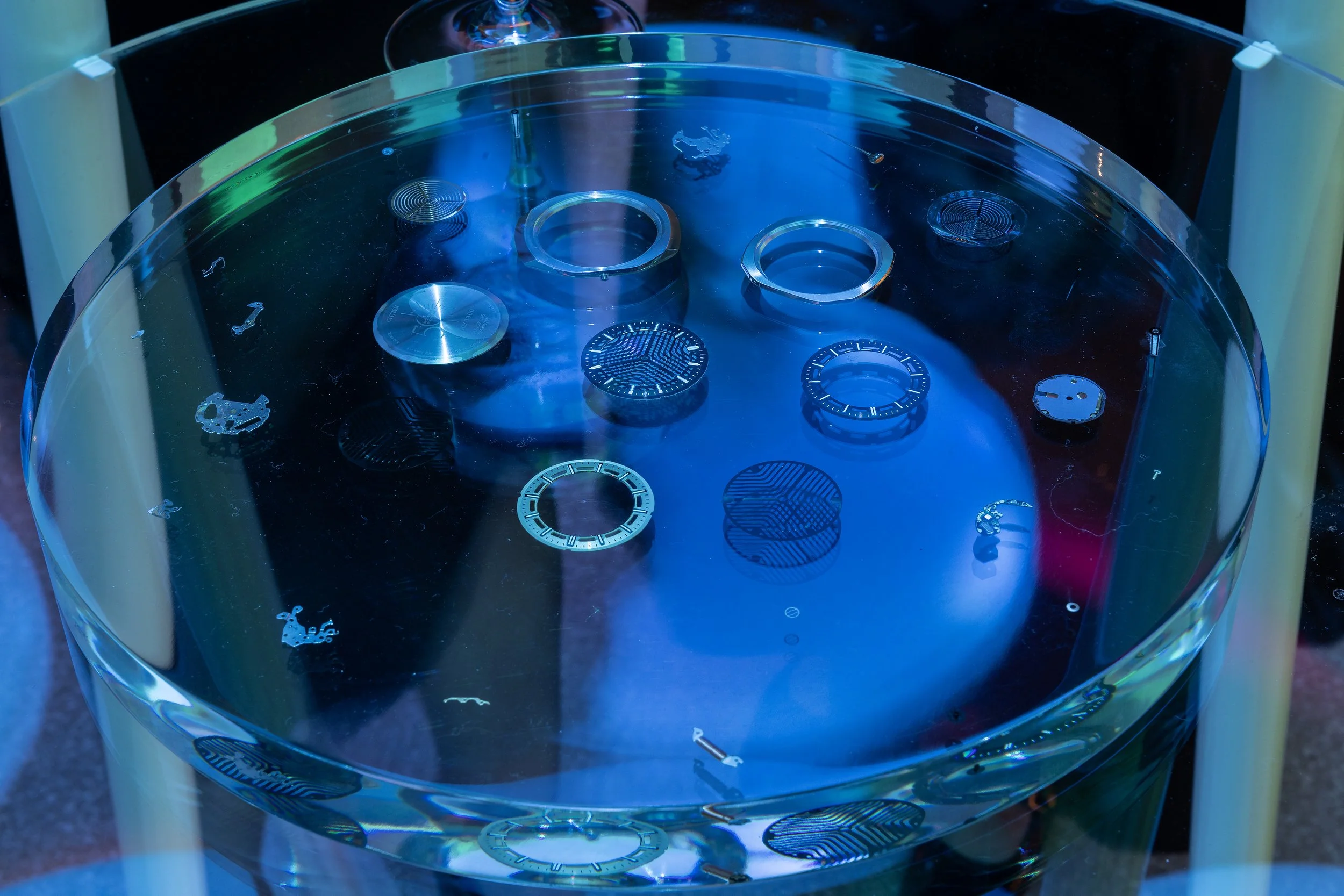
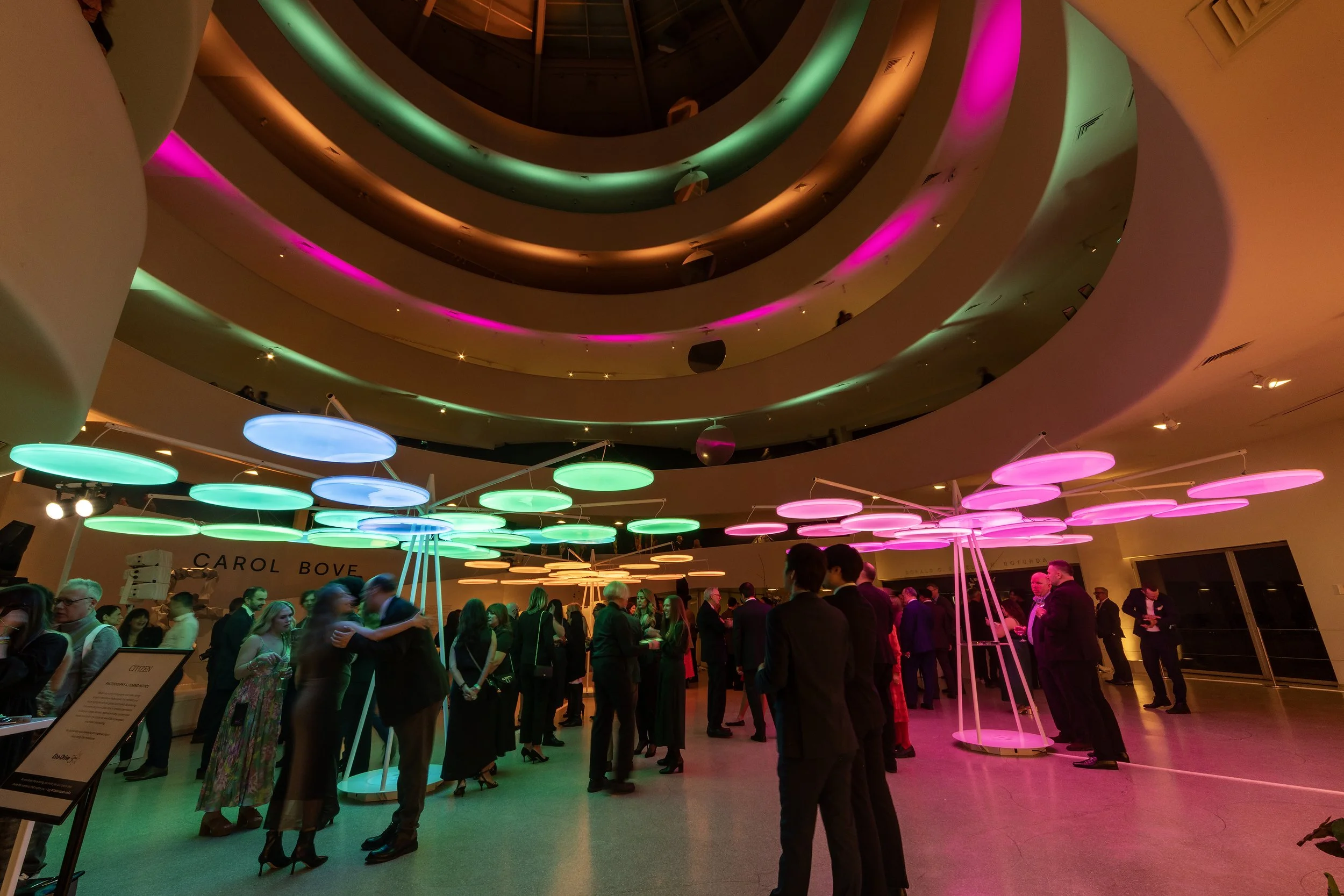
I am grateful to Carla Wilke, Chief Marketing Officer of Citizen Watch America, and Michelle Leo, Director of Marketing of Citizen America, for trusting the long arc of the project and for the partnership that made it possible.
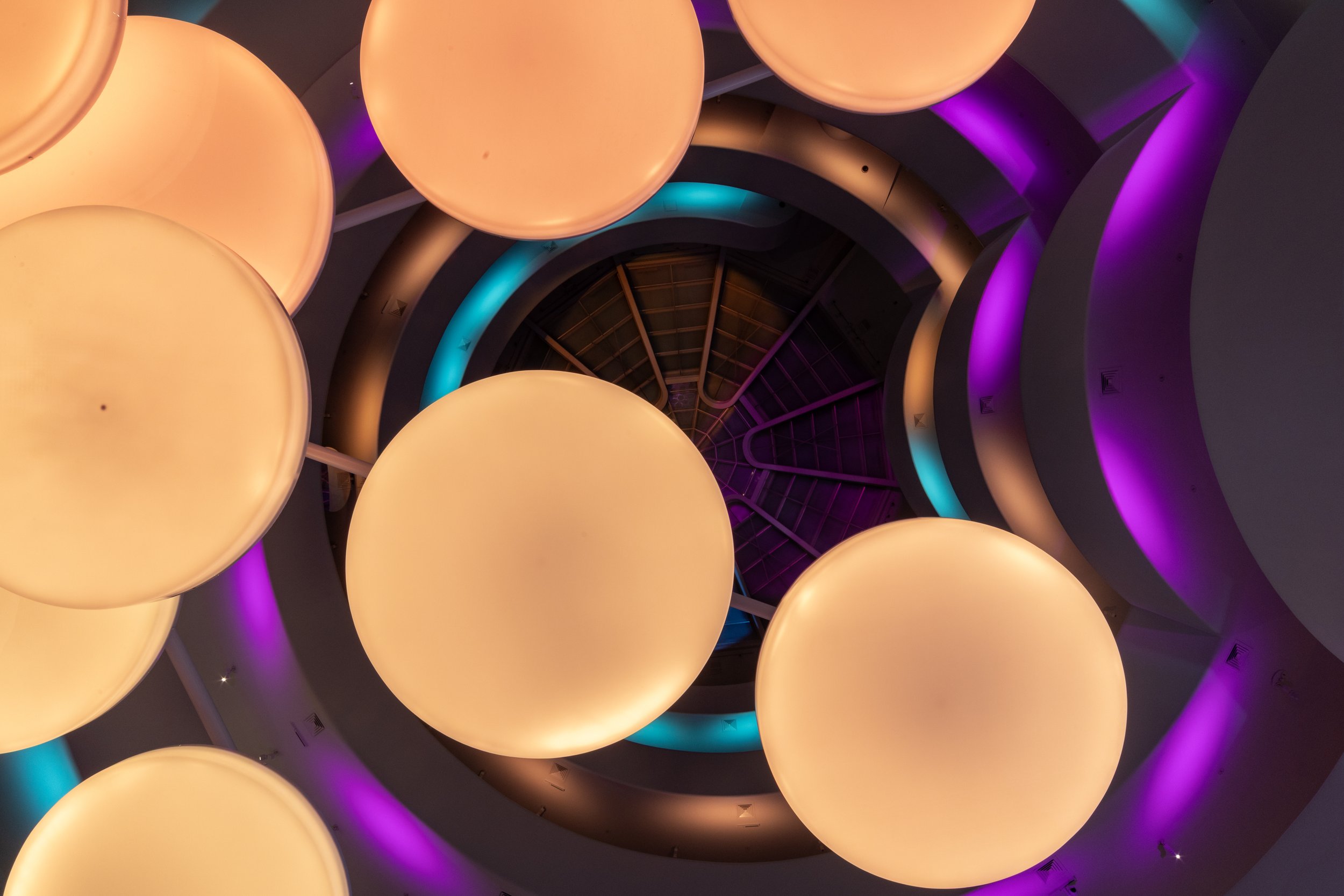
The structures in the rotunda and in Café Rebay were designed by Miguel Quismondo and Juan Carlos Bragado of MQ Architecture and fabricated by Pietro Pagliaro of 6HA, whose practice lives both inside and outside the art & design world. Their work translated the project's ideas into objects that belonged in the space, and that is what made the evening read.
The Guggenheim was a deliberate choice for this evening. Frank Lloyd Wright's rotunda is built around light and movement, with daylight falling from the oculus and time measured by the slow ascent of the spiral. For a technology that turns light into energy and keeps time indefinitely, the building itself became part of the argument.
The project had real impact on the brand's communication and positioning, advancing the strategic priorities that mattered most to Citizen throughout an anniversary year centered on this milestone.
When I take on a collaboration with a heritage brand, the work begins inside the DNA: legacy, founders, innovations, the cultural contexts that shaped the brand and that the brand has shaped in return. From there it becomes a four-handed practice with marketing, executive leadership, and the cultural execution that I lead. That is how cultural and brand work get designed together from the start, and that is when they compound.